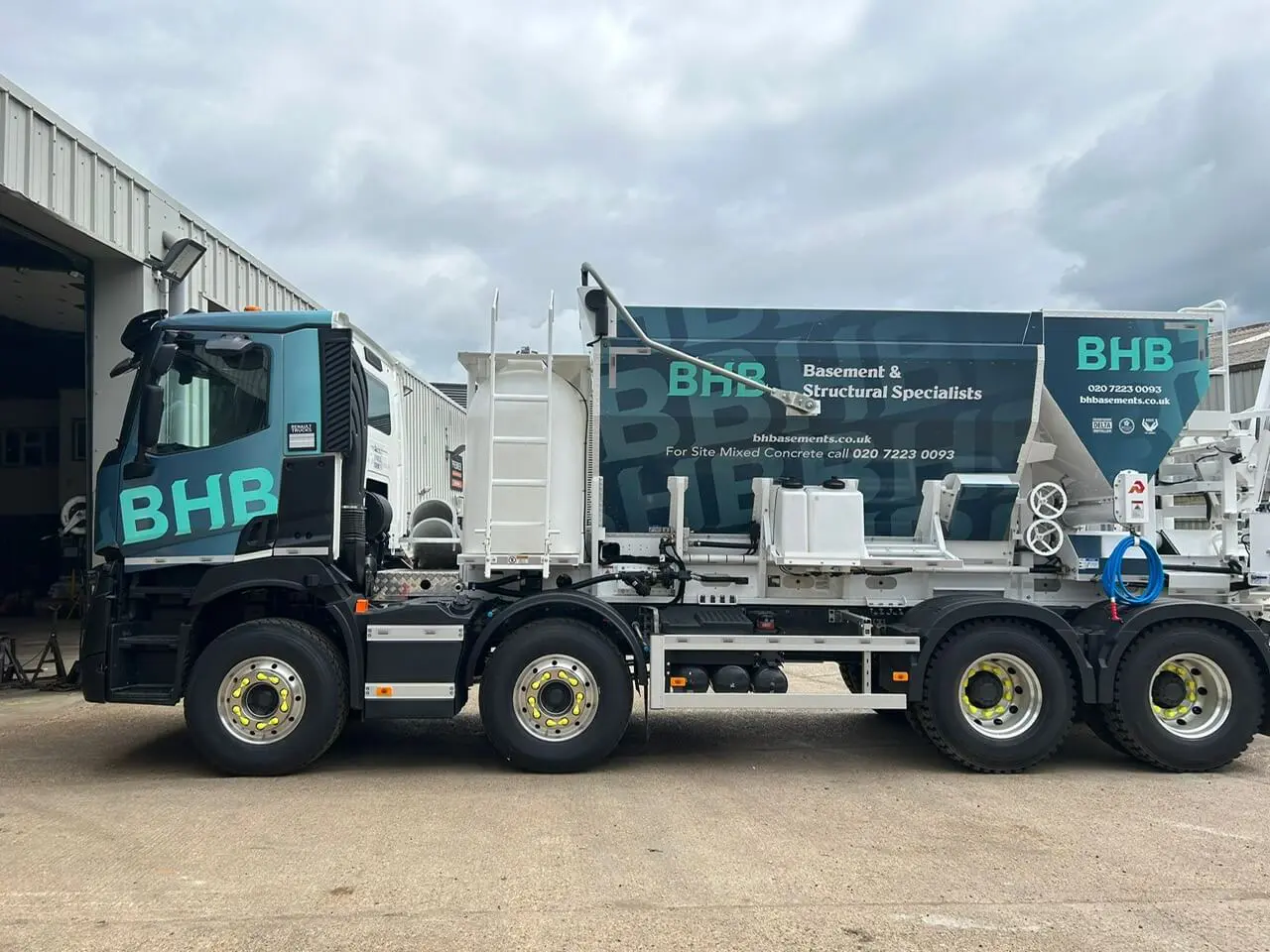
Ready Mix Concrete in Autumn: What Should Be Agreed Before the Pour?
RC Framework
We provide concrete delivery and pumping across Central London, including a ground line pump for...
Many people associate project delays with excavation, structural works, or unexpected site conditions. In reality, some basement projects lose momentum months before construction begins.
The reasons are often less visible. Incomplete feasibility work, unresolved design questions, planning challenges, budget uncertainty, and limited specialist input can all slow progress long before contractors arrive on site.
This is why experienced professionals involved in basement construction in London projects often place significant emphasis on the work completed before construction starts. The decisions made during feasibility, planning, and design stages can influence how efficiently a project progresses once work reaches site.
For homeowners, developers, architects, project managers, and structural engineers, understanding these early challenges can help create a clearer route towards delivery.
Why do projects lose momentum during the planning stages?
Most delays occur when important questions remain unanswered.
At the beginning of a project, design concepts often move forward faster than technical information. A homeowner may have a clear vision for the additional space. An architect may develop an attractive design. However, the project team still needs to establish how the basement will be constructed, what constraints exist on site, and what approvals will be required.
As more information becomes available, new considerations often emerge. Structural requirements may influence layouts. Access restrictions may affect construction methods. Planning requirements may introduce additional design work.
None of this is unusual. The issue arises when these questions are addressed too late or by consultants working independently of the wider project team.
Projects tend to move forward more efficiently when key decisions are tested early and supported by practical construction knowledge.
How important is feasibility work?
Feasibility work helps establish what a site can realistically accommodate before significant resources are invested in design development.
This stage often includes reviewing site constraints, access arrangements, neighbouring properties, planning considerations, and structural requirements. It allows the project team to understand what is achievable and where potential challenges may arise.
A thorough feasibility process does not eliminate every risk. It does help identify issues before they influence programme, budget, or design progress.
For many basement constructions in London, the feasibility stage provides the information needed to make confident decisions and avoid substantial redesign later in the project.
Planning applications often take longer than clients initially expect.
Basement projects may require supporting reports, technical assessments, construction management information, and detailed drawings before a local authority can assess the proposal properly.
Delays frequently occur when the project team submits incomplete information or discovers additional requirements after the application process has started.
The strongest applications are often those developed with delivery in mind. Project teams that consider planning requirements alongside construction considerations are usually better positioned to maintain momentum after approvals are granted.
The objective is not simply to secure permission. The objective is to secure permission for a scheme that remains practical, buildable, and commercially viable.
One of the most common causes of delay is waiting too long to seek construction input.
By the time planning permission has been granted, many important decisions have already been made. Structural layouts, excavation assumptions, access strategies, and programme expectations may already be established.
Early contractor involvement allows these assumptions to be tested before they become difficult to change.
An experienced basement contractor can review buildability, structural sequencing, temporary works requirements, site logistics, and construction methodology while designs are still developing.
This often gives the project team greater certainty and helps reduce the risk of revisions during later stages.
Many projects benefit from practical construction advice long before site mobilisation becomes a consideration.
Early discussions with basement specialists can help identify challenges, review design assumptions, and establish a realistic path towards construction. This allows project teams to make informed decisions using both design expertise and construction experience.
If you are considering a basement extension or complex structural shell project, obtaining specialist input during feasibility and planning stages can help move the project forward with greater confidence.
Budget concerns frequently influence project timescales.
As designs develop, project teams gain a clearer understanding of construction costs. Occasionally, this process highlights a gap between the original budget and the anticipated delivery cost.
When this happens, projects may pause while designs are revised or priorities are reconsidered.
Early construction input can help reduce this uncertainty. Contractors with relevant experience can provide practical feedback on likely costs, programme implications, and construction challenges before designs become too advanced.
This allows project teams to make informed decisions earlier in the process.
Some clients view the pre-construction stage as an obstacle to getting work started.
In practice, many successful projects invest substantial effort before construction begins.
They review risks, coordinate consultants, test assumptions, refine designs, and establish clear delivery strategies. This preparation often creates a more efficient construction phase because fewer issues require urgent resolution once work reaches site.
The result is not necessarily a shorter planning process. The result is often a smoother transition from approvals into construction.
Many experienced professionals involved in basement construction in London, projects recognise that time invested before construction can reduce disruption later.
Our directors work closely with clients, architects, engineers, and project managers from the early stages of project development.
Their experience in complex structural shell construction allows them to provide practical advice on buildability, sequencing, access requirements, and construction planning before designs become fixed.
This early involvement helps project teams assess opportunities, identify challenges, and establish realistic expectations before construction begins.
When a basement project stalls, the underlying issue is often a lack of clarity rather than a lack of ambition.
The most successful projects usually answer important technical, planning, and construction questions before site works begin. That preparation helps create a stronger foundation for the construction phase and reduces the likelihood of significant revisions later.
If you are planning a basement extension or underground development in London, BH Basements can provide practical guidance during feasibility, planning, and pre-construction stages. Contact our team to discuss your project and gain specialist insight that can help move your plans towards construction with greater certainty.
Basement Construction
For further information about BH Basements, please do not hesitate to get in touch. We are always happy to help.

For more captivating insights and expert advice, delve into BH Basements’ diverse range of blog articles.
We provide concrete delivery and pumping across Central London, including a ground line pump for...
Our basement construction service covers projects from soil analysis and pre-construction planning through to the...

Building a basement is a significant investment and ensuring that it remains dry and protected...