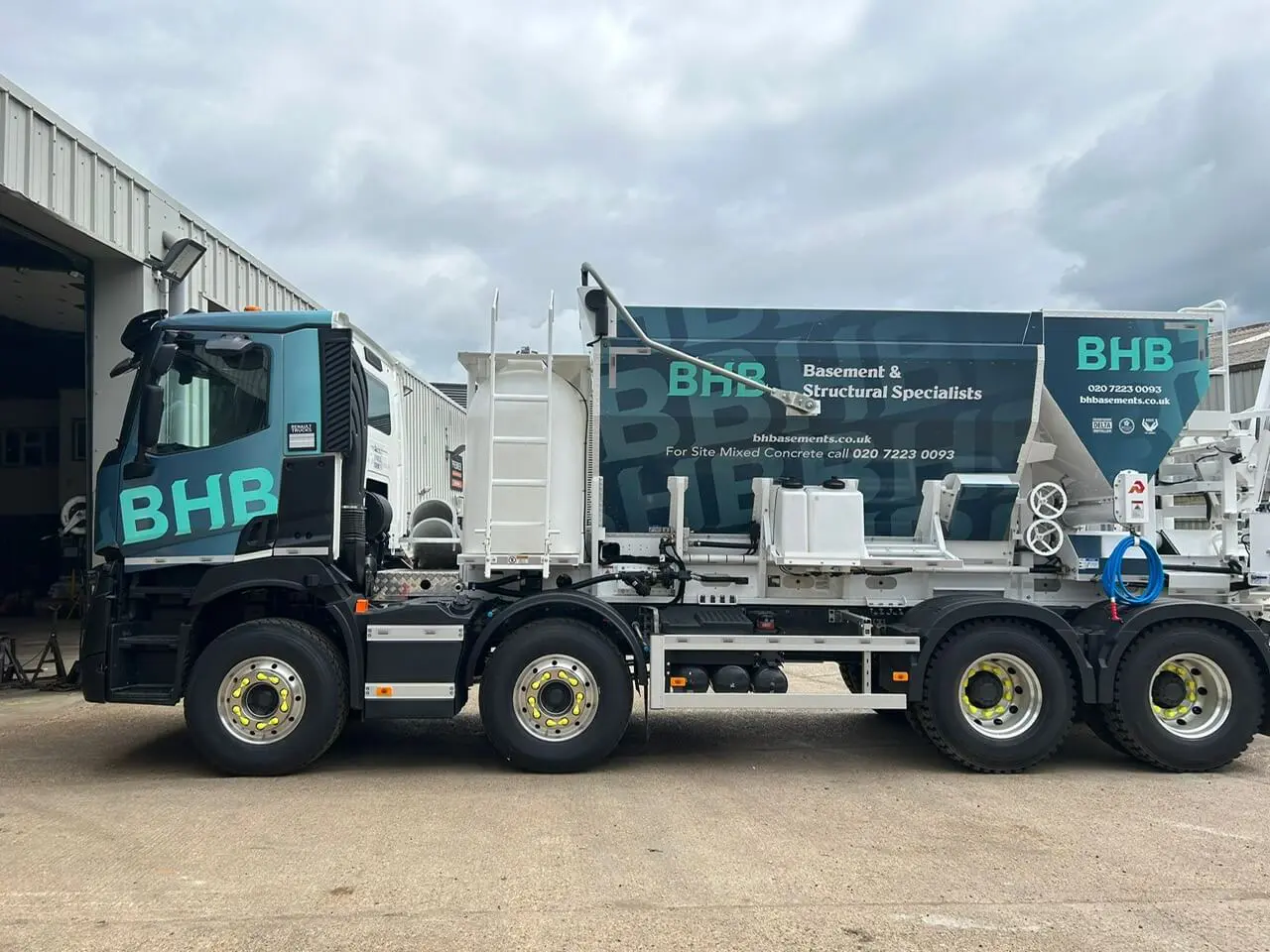
Ready Mix Concrete in Autumn: What Should Be Agreed Before the Pour?
RC Framework
We provide concrete delivery and pumping across Central London, including a ground line pump for...
Choosing a basement contractor affects far more than the finished space. It can shape the cost control, programme, structural quality and long-term performance of the whole project. In central London, that decision carries even more weight because many homes sit close to neighbouring properties, restricted access routes and detailed borough planning requirements.
A strong contractor will not only price the work. They will help you understand what needs to happen before construction starts, how the structural shell will be delivered and where the main risks sit. For basement construction projects in London projects, this early clarity can make the difference between a controlled build and a project that becomes difficult once work starts on site.
Basement work below an existing property needs different expertise from standard renovation work. The contractor must understand excavation, temporary works, reinforced concrete, underpinning, piling, waterproofing and site sequencing. They must also know how each stage affects the next one.
A good contractor should be able to explain the proposed construction method in plain language. You should feel clear on how the team will support the existing structure, manage ground conditions and protect the property while the new space takes shape.
For homeowners, that experience gives you better decision-making before you commit. It can help you understand what design choices may affect cost, what programme pressures could arise and what information the contractor needs before work begins.
When you compare contractors, do not judge them on price alone. A lower quote may look attractive at first, but it can leave out important details such as logistics, temporary works, drainage allowances or waterproofing interfaces.
Use these checks when assessing a specialist:
This list gives you a useful starting point. The next step is to ask how each point applies to your property. A credible contractor should answer with project-specific detail, not general sales language.
London boroughs can take different approaches to basement development. Planning expectations may cover basement depth, lightwells, construction management, trees, drainage, heritage assets and neighbour impact. Your contractor does not replace your planning consultant or architect, but they should understand how borough requirements affect buildability.
This matters because a design that looks clear on paper can still create construction pressure later. Restricted access, limited storage, party wall conditions and local working restrictions can all affect the programme.
A contractor with experience in basement construction in London, projects can identify these points earlier. That gives your design team and professional advisers better information before the project moves too far forward.
The structural shell forms the main below-ground framework of the basement. It supports the property, creates the new space and gives the later fit-out team a stable structure to work from. If this stage lacks control, the effects can carry through the rest of the project.
This is where specialist delivery matters. The contractor needs to coordinate excavation, temporary support, concrete works, waterproofing details, drainage points and interfaces with future services. Each stage depends on the quality of the previous one.
BH Basements specialises in complex structural shells across central London. Directors Thomas Job and Chris Barry personally oversee projects with their experienced team, bringing 35 years’ combined industry experience. That senior involvement gives homeowners a clearer route through technical decisions and site challenges.
Waterproofing should form part of the project thinking from the start. Below-ground spaces need a clear strategy for managing water pressure, drainage, joints, sump systems and maintenance access. If the project treats waterproofing as a late-stage product choice, the result may carry avoidable risk.
A specialist contractor should know how waterproofing connects with the structure. They should also understand when the project needs input from a qualified waterproofing designer. This helps protect the long-term use of the basement and gives the future fit-out team a stronger base to work from.
For homeowners, this means fewer unknowns later in the process. You gain a clearer understanding of what the system needs to do, how it will be installed and how future access will work.
Neighbouring properties need careful consideration on basement projects. Your contractor should understand party wall matters, vibration control, site cleanliness, deliveries and working hours. Good planning can reduce disruption and support a more professional build process.
Central London logistics also need close attention. Many projects have narrow roads, parking restrictions, limited storage and tight access for plant and materials. If the contractor does not plan these details early, the site can lose time once work starts.
A practical contractor will review access, waste removal, delivery timing and protection measures before setting the programme. This helps the project team work with fewer interruptions and gives homeowners a clearer view of how the build will operate.
Basement construction involves structural work, excavation and heavy materials. The contractor needs strong health and safety systems, trained staff and active site supervision. These points should sit at the centre of contractor selection.
We’re a ASUC member and sets high standards for technical knowledge, staff training, financial standing and health and safety. This matters because homeowners need confidence in the team managing the work, not only confidence in the final design.
You should ask who will manage the site, how the company monitors standards and how senior team members stay involved. Clear answers can tell you a lot about how the project will feel once construction starts.
A basement can add usable space to a London home, but value depends on controlled delivery. Good contractor choice supports future use because the project starts with better planning, stronger sequencing and clearer communication.
The right contractor helps your team avoid avoidable redesign, manage programme pressure and make decisions with a fuller understanding of the build. This supports homeowners, architects, engineers and later fit-out teams because everyone works from a more reliable construction base.
For basement construction projects in London projects, the strongest contractor is the one that understands both the technical work and the practical demands around it. That combination can protect quality, reduce uncertainty and help the project move from concept to completion with greater confidence.
We work with homeowners across central London on basement extensions, complex structural shells, piling and high-end fit-out support. If you want experienced guidance before committing to the next stage, contact us to discuss your project and understand the most practical route forward.
Basement Construction
For further information about BH Basements, please do not hesitate to get in touch. We are always happy to help.

For more captivating insights and expert advice, delve into BH Basements’ diverse range of blog articles.
We provide concrete delivery and pumping across Central London, including a ground line pump for...
Our basement construction service covers projects from soil analysis and pre-construction planning through to the...

Building a basement is a significant investment and ensuring that it remains dry and protected...