
Why Basement Tanking Fails in Converted Properties
FoundationWaterproofing
Building a basement is a significant investment and ensuring that it remains dry and protected...
Autumn rainfall can affect the conditions around a basement excavation, but the response varies from site to site. Ground type, drainage and existing groundwater conditions all influence what happens after prolonged or heavy rain. For project teams planning basement excavations in London, the practical response is to use site-specific ground information to shape the excavation sequence, temporary works and water-management strategy.
This matters because seasonal assumptions can lead to the wrong construction response. A wet autumn does not mean every site will experience the same groundwater change. The project team needs to understand how the ground is likely to behave, where water could enter the excavation and how those conditions may affect the chosen construction method.
Rainfall changes moisture levels in near-surface soils. Clay-rich ground can shrink or swell as its moisture content changes, while granular deposits can allow water to move through the ground more readily. The British Geological Survey notes that London Clay can experience volume change in response to moisture, and that excavation bases in London Clay may also experience heave through stress relief and swelling on wetting.
For basement excavations in London, those differences affect planning before work starts. The design team may need to consider the condition of exposed ground, the likelihood of water entering the excavation and the temporary support needed as excavation progresses. The effect depends on the actual ground profile, so investigation and monitoring should guide decisions instead of the season alone.
Ground investigation should give the project team enough information to understand the soil profile and likely groundwater conditions at the proposed excavation depth. Depending on the scheme, this can include boreholes, sampling and groundwater observations or monitoring. The findings then inform the structural design and construction methodology.
Our basement construction service covers projects from soil analysis and pre-construction planning through to the waterproofed structural shell. Bringing this information into the construction discussion early can help architects, engineers and project managers test the proposed sequence before excavation starts.
Where piling forms part of the design, our piling service can review the design team’s soil investigation or arrange further investigation. The piling design can then respond to the structural requirements and ground conditions. Piling may support foundations or form part of a retaining solution, depending on the project.
Underpinning may also form part of the structural approach where excavation affects existing foundations. The engineer should determine the appropriate method from the existing structure, proposed excavation and site conditions. This avoids treating one foundation solution as suitable for every basement.
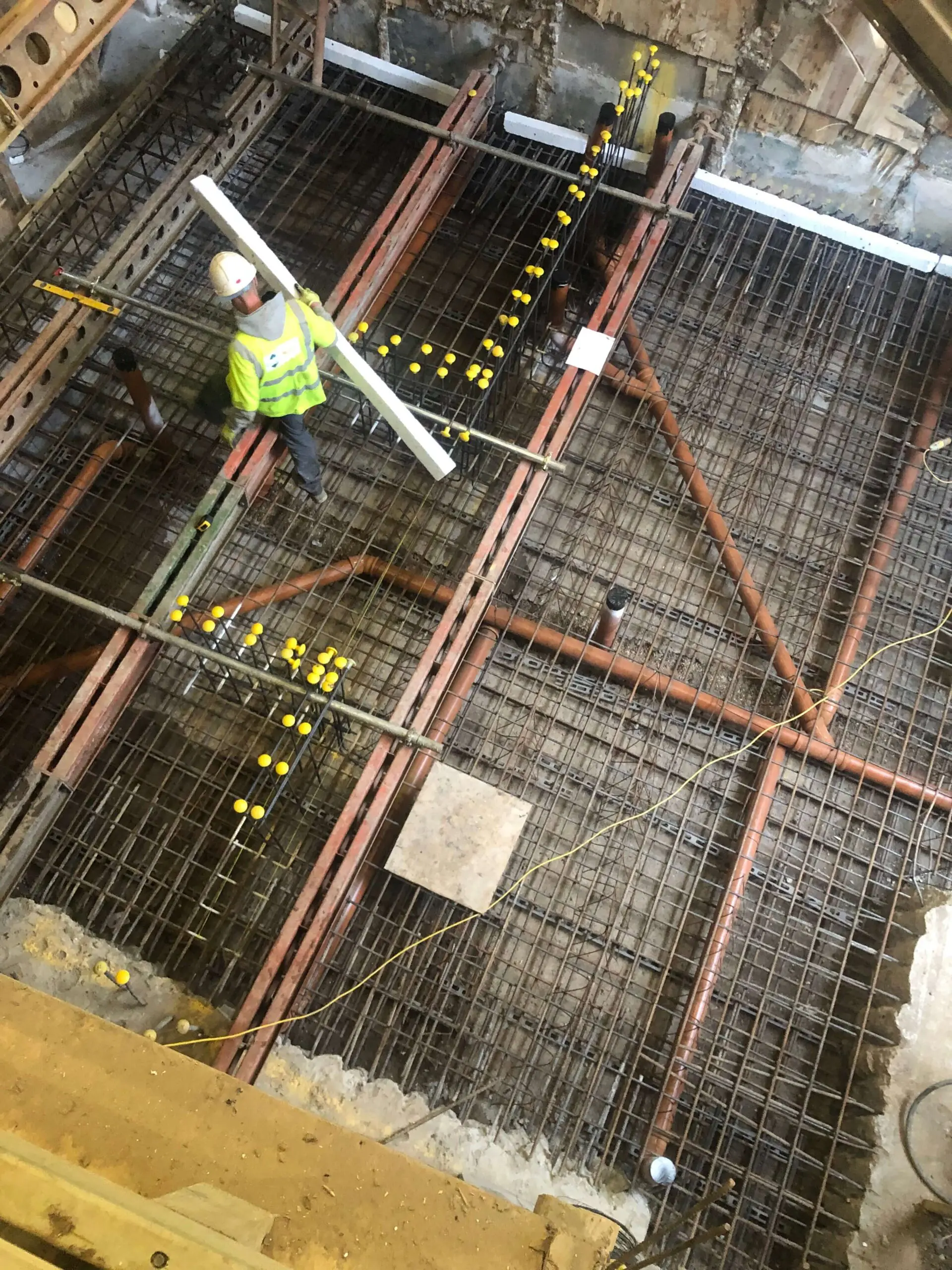
Temporary works support the site while the permanent structure remains incomplete. Their design needs to reflect the order of excavation and the loads acting at each stage. If wetter ground or unexpected water changes the conditions assumed in the design, the project team needs a clear process for review before excavation continues.
Our temporary works service covers support for enabling, demolition and excavation. Coordinating those works with the permanent structure can reduce interface problems and give the site team a clearer sequence to follow. It also helps the wider project team understand where changes in ground conditions could affect programme or access.
If you are preparing basement excavations in London for autumn or winter, contact BH Basements while the construction methodology still has scope for review. We can discuss the available soil investigation, proposed excavation sequence and the relationship between piling or underpinning and temporary works.
Early contractor input cannot remove ground or groundwater risk. It can, however, help the project team identify buildability issues before excavation starts and establish how the team will respond if site conditions differ from the design information.
The project team should base water management on the source, volume and location of water the team finds or expects on site. Surface water may need diversion away from the excavation, while groundwater below the water table may require a designed control system. CIRIA notes that excavations below the water table can face flooding or instability without suitable groundwater control.
Groundwater control also needs engineering consideration. Pumping can change surrounding groundwater conditions, so the team should assess potential effects when selecting a dewatering method. The ground investigation and excavation design should guide that choice, with site monitoring supporting decisions as work progresses.
A planned approach gives the site team defined actions if water levels or inflows change. That can support safer decision-making and reduce the risk of unplanned changes disrupting later structural work.
The project team should consider structural waterproofing before it completes the basement shell. The chosen system needs to suit the structure, expected water conditions and the details created by joints, penetrations and interfaces.
Our tanking and structural waterproofing service covers Type A, Type B and Type C approaches. A CSSW-qualified individual designs each system. Coordinating waterproofing with excavation and structural work at an early stage can reduce the need to resolve difficult interfaces after the shell has progressed.
For project teams, that creates a clearer route from excavation into the permanent basement structure. It also gives designers and contractors time to coordinate details that may become harder to change later.
Autumn planning should allow for evidence from the site. Heavy or prolonged rainfall can affect surface conditions and water entering an excavation, but the programme should not assume that every period of wet weather will create the same response below ground.
For basement excavations in London, the project team can improve programme control by agreeing monitoring, review points and responsibilities before excavation begins. If actual conditions differ from the design assumptions, the team can assess the change against an agreed construction sequence instead of making isolated decisions on site.
This approach can help protect later activities from avoidable disruption. It gives structural engineers, project managers and main contractors a clearer basis for coordinating temporary works, the permanent structure and waterproofing as excavation progresses.
Autumn ground conditions can influence excavation planning, but the correct response depends on the site. Ground investigation, suitable temporary works and a construction methodology that accounts for water conditions give the project team a stronger basis for delivery.
We support complex basement construction from pre-construction planning through excavation and completion of the waterproofed structural shell. If you are reviewing a London basement scheme, contact our team to discuss the ground information, site constraints and proposed excavation strategy before work starts.
Basement Construction
For further information about BH Basements, please do not hesitate to get in touch. We are always happy to help.

For more captivating insights and expert advice, delve into BH Basements’ diverse range of blog articles.
Building a basement is a significant investment and ensuring that it remains dry and protected...

Discover how to build a safe, durable commercial basement in London. Avoid structural risks and...
Piling How Concrete Piling Supports Construction on Challenging Sites Wed, 2 Sep 2026 Challenging construction...